
Arena & Ménage Surface Rejuvenation
Protecting Your Horse. Preserving Your Investment.
Your arena is one of the most important investments on any equine yard. It is also the surface your horse works on every day — and the condition of that surface directly affects soundness, comfort, and long-term health.
A poorly maintained arena doesn’t just ride badly. It can create uneven loading through the limbs, increase concussion, reduce grip and raise the risk of soft tissue injury during what should be routine schooling or exercise.
At Canter Construction, arena maintenance and rejuvenation is carried out with a horse-first approach. We combine professional equipment with practical equestrian knowledge to restore tired surfaces, maintain consistent footing and help protect the horses working on them.
Why Arena Surface Condition Matters
When an arena surface deteriorates, the effects are felt immediately by the horse.
Common problems include:
Compacted or uneven surfaces
Hard or compacted going increases concussion through joints and tendons, particularly during repeated schooling.
Deep or inconsistent footing
Excessively deep surfaces place unnecessary strain on ligaments and soft tissue structures.
Surface migration to arena edges
Over time, material moves toward the kickboards leaving thin patches in the track where horses work most.
Moisture imbalance in the surface
Incorrect moisture levels affect grip and stability, increasing slip risk.
Long-term training issues
Poor arena maintenance is a contributing factor in many cases of training-related lameness.
The cost of a single lameness issue — veterinary diagnosis, treatment, rest and lost training time — will almost always exceed the cost of proper preventative arena maintenance.
What Our Arena Rejuvenation Service Covers
Arena maintenance at Canter Construction focuses on restoring surface consistency and identifying early issues before they become expensive problems.
Typical work includes:
Professional Surface Harrowing
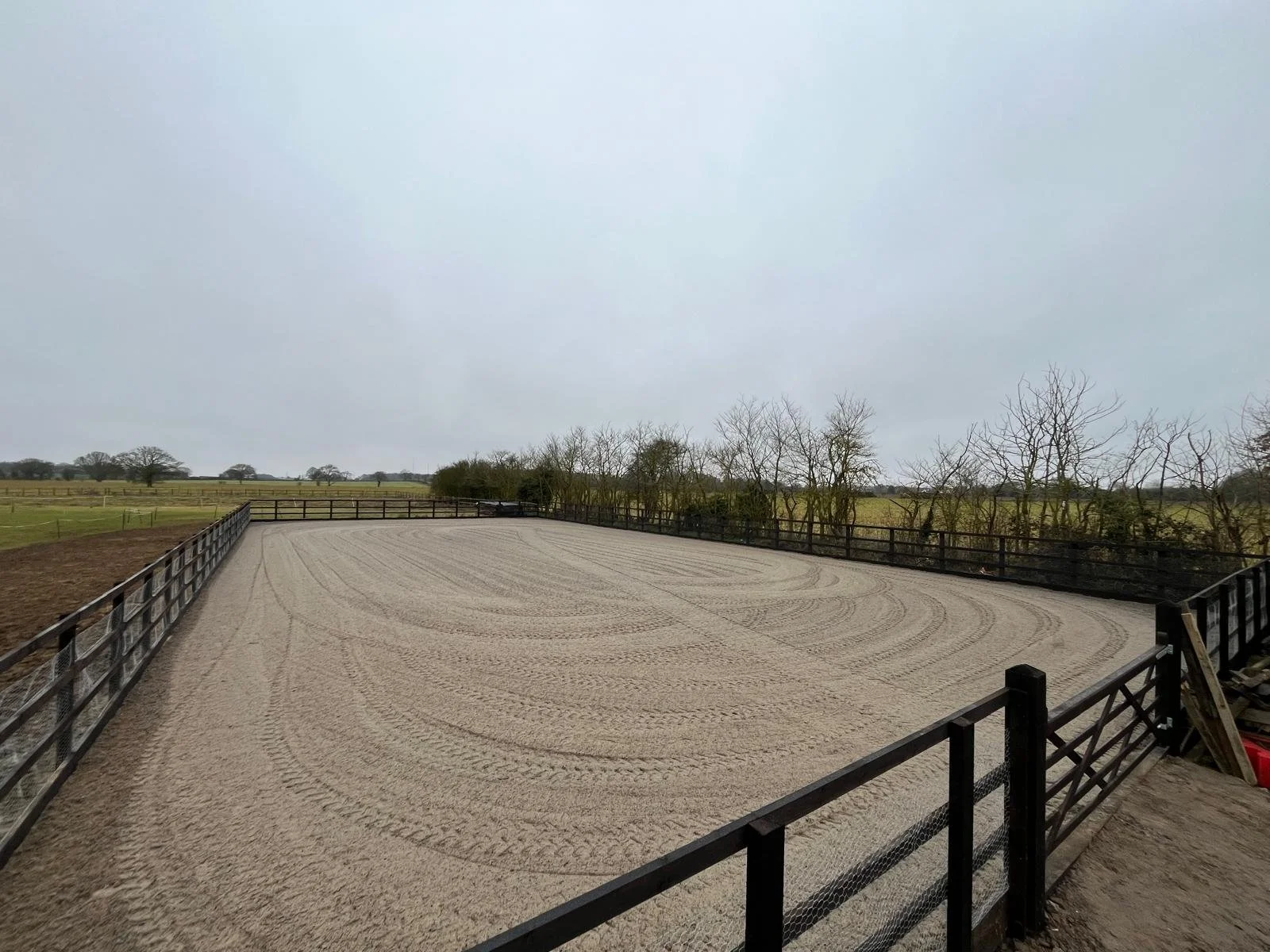
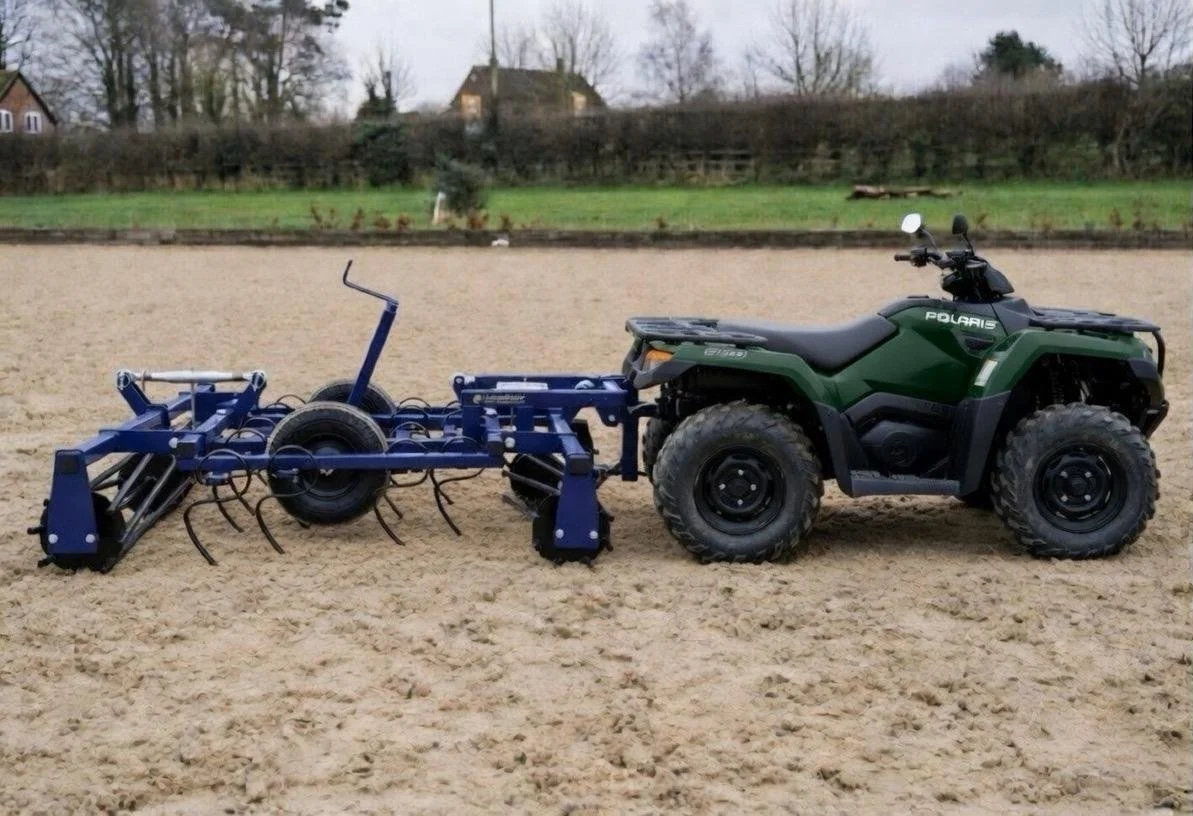
Using specialist arena equipment to loosen compacted surfaces and redistribute materials evenly across the arena.
Edge Restoration
Pulling migrated surface material back from the kickboards into the working track to prevent thin patches and uneven footing.
Surface Levelling & Condition Checks
Assessing the arena for high spots, low spots and compaction areas that affect performance and drainage.
Deep Surface Rejuvenation
For neglected arenas, deeper tine work and multiple passes can restore structure and improve surface performance.
Drainage & Moisture Assessment
Identifying areas where poor drainage or surface structure is affecting moisture balance.
Documented Arena Maintenance
Many yards maintain their arenas but have no record of the work carried out.
Canter Construction provides documented maintenance records so yard owners have clear evidence that surfaces are being properly managed.
Each visit can include:
Timestamped photographic record of the arena surface
Written condition notes outlining observations
Recommendations for ongoing maintenance
A cumulative maintenance log for contracted yards
For professional yards, riding schools and competition facilities, this documentation can be valuable evidence that the arena surface is being maintained responsibly.
Arena Maintenance Services
We offer flexible service options depending on the condition of your arena and how frequently it is used.
Initial Arena Assessment
A full review of the surface condition with practical recommendations for improvement and maintenance planning.
Standard Maintenance Visits
Routine harrowing, edge work and condition checks designed to keep arena surfaces consistent and safe.
Surface Rejuvenation
For arenas that have been neglected or are performing poorly, deeper rejuvenation work can restore surface structure and ride quality.
Annual Maintenance Support
Regular scheduled visits help maintain surface condition throughout the year and prevent long-term deterioration.
Built Around the Horse
Every arena we work on is approached with one priority — the welfare and safety of the horses using it.
Consistent footing, proper surface depth and well-maintained tracks all contribute to safer schooling and better long-term soundness.
Our goal is simple:
to help yard owners maintain arenas that ride properly, last longer and support the safe training and management of horses.
Signs Your Arena Needs Rejuvenation
Many horse owners don’t realise their arena is deteriorating until a problem occurs. The following are clear warning signs that your arena may need professional attention:
Uneven Surface or Ruts
Horses constantly working on high or low spots can develop uneven muscle development and strain tendons. Shallow depressions or ruts are a red flag.
Excessively Hard or Compacted Going
Footing that feels “packed down” or hard increases concussion on joints and can lead to lameness over time.
Surface Migration to Edges
If material has built up against kickboards or along the edges, it creates thin patches in the working area and increases the risk of slips and trips.
Pooling Water or Poor Drainage
Standing water or soggy patches indicate the arena is not draining correctly. This affects ride quality and accelerates surface wear.
Dust or Loose Surface Material
Excessive dust, or fine material blowing away, signals that the surface structure is breaking down and requires redistribution.
Visible Hard Spots or Soft Pockets
High spots or soft “holes” appear across the arena as the surface settles unevenly over time, increasing risk for horses and riders.
Noticeable Change in Ride Quality
If your horse feels “off balance,” slips, or the arena rides inconsistently from day to day, it’s time for an assessment.
What This Means for Your Horse
Even minor surface issues create repetitive strain on limbs, tendons and ligaments. Early intervention preserves your horse’s soundness, reduces injury risk, and prolongs the life of your arena.
What Canter Construction Can Do
We assess every arena thoroughly, provide documented recommendations, and restore the surface using professional equipment tailored to your arena type and usage.